Featured Post

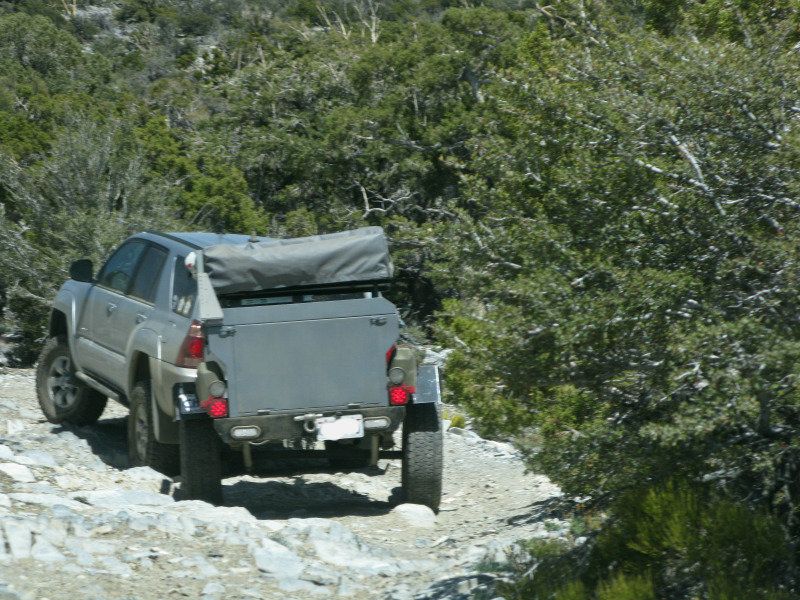
My Expedition Vehicle & Trailer

Monday, October 8, 2012

Exploring Blewett Pass

In June of 2012 I had an opportunity to explore areas that were a little further east of my previous trips. The state of Washington has a very interesting history with regards to gold mining but I found that the wet climate is very destructive of wooden structures. What is readily preserved in Southern California's dry desert climate is not something that may last long with the yearly 9 months of rain and snow that descends upon western Washington.

It was 1858 when Mortimer Robinson found gold in the gravel of Peshastin Creek. By 1874 the placer workings had run out but veins of gold had been discovered and soon the hills were riddled with thousands of feet of tunnels and vertical shafts. The small town that was established was originally called Warner when the US Post office was established but later in 1893 it was changed to Blewett after Edward Blewett of Seattle. His gold mining company controlled the majority of the claims in the hills around the creek. The current highway runs right through the original town site at an elevation of 2,328 feet. The town once included a two story hotel, school, telegraph office, boarding house, log cabin and frame homes as well as the inevitable saloon.


This building may have been the one covering the stamp mill remains in the next pictures below

This once mighty twenty stamp mill is now a frail shadow that is mainly composed of rotten wood and rusty hardware. It is located just off the highway near the forestry road's gated entrance.

This fascinating 30 foot diameter wooden water wheel is gone but possibly it powered the early arrastre for grinding ore.

Some of the modern miners are lacking in stewardship of the land in their rush to mine for gold. The ore cart track system is likely to be old stock "salvaged" from other mining claims. There were literally piles of rusty track all up and down the road.

Many old mines have been extensively renovated in the quest for highly valuable gold. This picture was taken without entering the mine.

Yet some facilities still lie dormant, such as these ore cart tracks covered in a carpet of pine needles. They lead to a chute that brought ore to a mill.

Here the road passes through the middle of one operation. The extensive tunnels' entrance is covered in a landslide yet someone is keeping the buildings in good shape.

This old air powered Eimco 12B rocker shovel has a new paint job despite sitting unused for many years. It was attached to a dump cart and an Eimco 401 compressed air powered locomotive.

This site was well back from the road but looked to be well maintained with buildings sporting stout doors and windows.

Keep out!

I found this sign above a 300 foot deep vertical shaft

The full story of Ronald's demise is here on page 4 http://www.dnr.wa.gov/Publications/ger_dgernews_2006_v3_no3.pdf
"Photos found on the camera of Ronald Calder, 46, suggest he'd explored caves and mines in the area before attempting to descend into an abandoned gold mine, said Detective Mitch Matheson of the Chelan County's Sheriff's Office. Calder set out June 20. His car was found at a monument on the Old Blewett Highway about 8 miles north of the summit and 1.5 miles from the mine shaft. Calder appears to have tied a rope around a tree and descended about 100 feet into the shaft, which was about 4 feet by 4 feet wide, Matheson said. The detective believes that Calder then unhitched himself on a ledge to explore some horizontal shafts in the mine and was later unable to grab back onto his rope. Matheson said the temperature was about 55 degrees in the shaft and that Calder, an inexperienced climber, was wearing only light clothing, having left his pack at the top. A coroner's report indicates Calder died of hypothermia, Matheson said."

 It was a remote and lonely place to die alone.

When researching where to go I found some fascinating photos and narrative about Blewett Pass at this site:
http://www.brian894x4.com/Washeastcascadestripday3.html   It is interesting to compare his 2003 photos with mine and note some interesting changes.

The holders of the current mining claims have posted all sorts of dire warnings in an attempt to curtail legal access to the public forestry road. The road crosses right through some mining claims so it is difficult to respect the rights of the owners in those situations. Take pictures and nothing else!

Old gas and diesel engines from Hercules and Cleveland tractor (Cletrac) litter the hillsides.

When searching for the old tramline that ascended 1000 feet up the hills I came across a segment of early 1900s wire rope. It consists of a hemp rope center wrapped by 6 large cables each of which is made of 19 smaller strands. These were very common with logging operations that pulled logs through systems of chutes.

I could not find any standing towers. This picture of a collapsed one that looked to be a double A-Frame is the best that I could do.

This grainy telephoto shot shows the roller located at the top of the tower for the drive cable.

When I made it up the full 1,000 feet to the top of the forestry road I was greeted with wonderous vistas of the craggy Cascades as well as Spring wildflowers.

Be sure to explore the surrounding area for great photo opportunities such as this Northwest Engineering pull shovel!

Or this really blue Studebaker truck.

Thanks for visiting my blog and sharing the adventure. Be sure to share the blog with your friends and family!

Sunday, July 1, 2012

Mazourka Canyon Exploration

After my recent trip to Papoose flats I wanted to explore Mazourka Canyon in more detail. In particular I wanted to find the way up to this tantalizing trail that clung so precariously to the mountain side.


It can be clearly viewed from highway 395 and the road eventually tops out close to 8,000 feet.  Starting into the canyon I tried out half a dozen different trails, some  quickly ending in dead ends. Others ran for quite a ways and just petered out as if no trail had ever existed, leaving me perched high above the desert.


Along the canyon are dozens of  mine shafts, each with the tantalizing remains of a story about the struggle for riches in a dry and remote desert canyon.


Part of the story at these sites is their dump of tin cans and other containers. You can sometimes find pieces of old glass bottles or even complete bottles when lucky.

The color helps to give an idea of the age because it was most likely clear glass when it was originally manufactured. Pure silica  by itself will produce clear glass but iron impurities can cause yellow color variations to appear within the glass. Different additives have been employed in glass to stabilize the color and prior to 1915, manganese was the additive most widely used. When the manganese is subjected to UV light it oxidizes and gives the glass a purple tinge.

Other sorts of natural color can also be found nearby!


One mine that I explored was the most amazing one of all with endless horizontal shafts. It will require a return trip to obtain proper photos of the heavily timbered vertical shafts. Some of these shafts had ladders that disappeared into bottomless crystal-clear pools of water.

On my second day I discovered the access point to the zig-zag road and spent quite a while traversing the countless miles of old mining road.  They led me to many interesting things, thousands of feet above the canyon.

As I drove I wondered about the people who had invested so much into building this road and ultimately what had led them to abandon their mighty efforts. There were countless vistas to enjoy on the way up, each one at higher and higher elevations
.
I finally came close to the main mining operation and saw a cabin tucked high up into a side canyon.


The interior was not in very good shape but featured an interesting ceiling with sewn canvas panels held up by narrow strips of wood.


The nearby mine appeared to have been extensively worked over to prevent entry by any humans. I am guessing that the main horizontal entrance was deliberately collapsed over these heavily barred galvinized culverts. 

There were many old vertical shafts that are most likely leading to this recently blocked horizontal shaft. All of them have been marked with these signs.

Lots of other interesting relics litter the area but the redneck morons cannot resist shooting at them and literally are destroying history.

I attempted to drive the road past the mine but was halted by large bolders and a landslide a little further up.


It might be a great hike to complete on another adventure! Thanks for joining me to this visit to a remote canyon that is highlighted with history from California's mining heydays.

Tuesday, May 8, 2012

Exploring Papoose Flats with my Expedition Trailer, May 2012


For the weekend of May 4-5-6, I led a large group of overlanding friends to explore an area in the Inyo Mountains known as Papoose Flats. This area also included Mazourka Canyon, Mazourka Peak, Squaw Flats, Harkless Flats and the Narrows. This section of the Inyo National Forest is located a little east of Big Pine, California.

The convoy heading out early Friday morning

We had quite a diverse group of vehicles including a stock vehicles, a 60's Land Rover, Land Cruisers and more  that come together to explore and camp. This is a shot of the initial group high atop Mazourka Peak where numerous radio relay sites keep a silent watch high above Highway 395.

Even more interesting than the vehicles were all of my friends who owned them!

We chose the more difficult route into Papoose Flats by coming in from the south through Mazourka Canyon. This route includes rocky terrain, tight turns, numerous trees as well as a bit of routefinding. The northern routes from the old Death Valley Road are much much easier but are still unimproved roads with steep hills and loose dirt. This picture is where we aired down our tires in Mazourka Canyon. Dropping the air pressure increases the contact area, or "patch" of the tire tread to the ground. It also helps the tire to conform to rocks and irregular terrain.

Papoose Flats offers quite a varied expanse of terrain with very scenic views of the Sierra Nevada Mountains as well as steep roads, narrow canyons and interesting mines.


Friday night's campfire being enjoyed by Jason, Chris and Dave

We also had some wonderful entertainment; Live bluegrass music!

My trailer's Roof Top Tent (RTT) under clear and starry skies and lit externally by the bright moonlight.

The trailer tracked really well through rough terrain


On Saturday a smaller group of vehicles headed out to the Narrows. Other folks stayed in camp to hike, nap or take shorter drives. The next two pictures are from the very steep northward route to go to the Narrows. I would not recommend it for inexperienced drivers! Also be sure to have tire repair equipment and recovery gear while out in this area.


Heading down into the Narrows from the north. That is Ian's well equipped Land Cruiser ahead of me.

Inspecting an old mining cabin in the Narrows

Joey & Jason are viewing a classic old refrigerator damaged by thoughtless people.

The fabled Mines of Moria?


The furry flying new owner of the Narrows mine!!

During our exit of the Narrows we had one vehicle suffer a flat tire after all of the other vehicles passed through the same point. It is typical of the unexpected things that demand that you be well prepared. With a good spare and the right tools we were quickly on our way.

After making it back to Death Valley Road we dropped into Harkless Flats to test out the crossover route that connects to the main road into Papoose Flats. It did have some steep and loose sections but it was actually a better road than the main northern route into Papoose Flats.

Saturday night was Cinco de Mayo and Dave and Jody prepared some wonderful tacos that they shared with all. After another great campfire everyone turned in for the night. Outside of our tents the "super" moon cast a bright light on our nomadic campground as we all slumbered through the freezing temperatures.

On the final day of our adventure some folks continued the exploration by heading back over to Harkless Flats to check out the terrain and some more old mines. All the way out we were very ably guided by Chris' young son who was quite adept at using a topographic mapping app on an iPad.

Here we are starting from a fairly high altitude above the Owens Valley, heading down a descent of almost 500 feet to the old JM mine. The trail is a really well built path that could easily handle pack mules.

Joey is really enjoying the views! I can't wait to see all of his photos!

The long hot hike was rewarded with an amazing mine clinging precariously to the side of the mountain! Remember that many mines are very dangerous so it is best to just take pictures.

A skilled team of mining veterans demonstrates how to haul ore in a uniquely modified wheelbarrow.
Trudging back up the steep incline.

After a brief stop at another abandoned mine we headed back to pavement to air up again. After what seemed like endless days of exploring I was sad that the adventure was ending.
To commemorate the good times and memories we had an official Expedition sticker created for everyone's vehicles. For those of you who could not make this trip I am glad that you were able to stop by and share the adventure here at Sun To The North!